How Wastewater Treatment Protects Groundwater and the Rivers It Feeds
September 16, 2026
 On the fourth Sunday of every September, World Rivers Day celebrates the world’s waterways by honoring the multitude of positive contributions of rivers. World Rivers Day was first recognized in 2005 and is now celebrated by millions of people in more than 100 countries, with emphasis on river conservation and sustainable management.
Rivers and creeks don’t exist in isolation. Much of the water that sustains them comes from groundwater, and groundwater is only as clean as what’s allowed to reach it. When wastewater isn’t properly treated, contaminants can work their way into the soil and aquifers below, eventually surfacing in the streams and rivers that World Rivers Day was created to celebrate. That’s why proper wastewater treatment is one of the most direct ways to protect local waterways.
The Role of McFadden’s Wastewater Operators
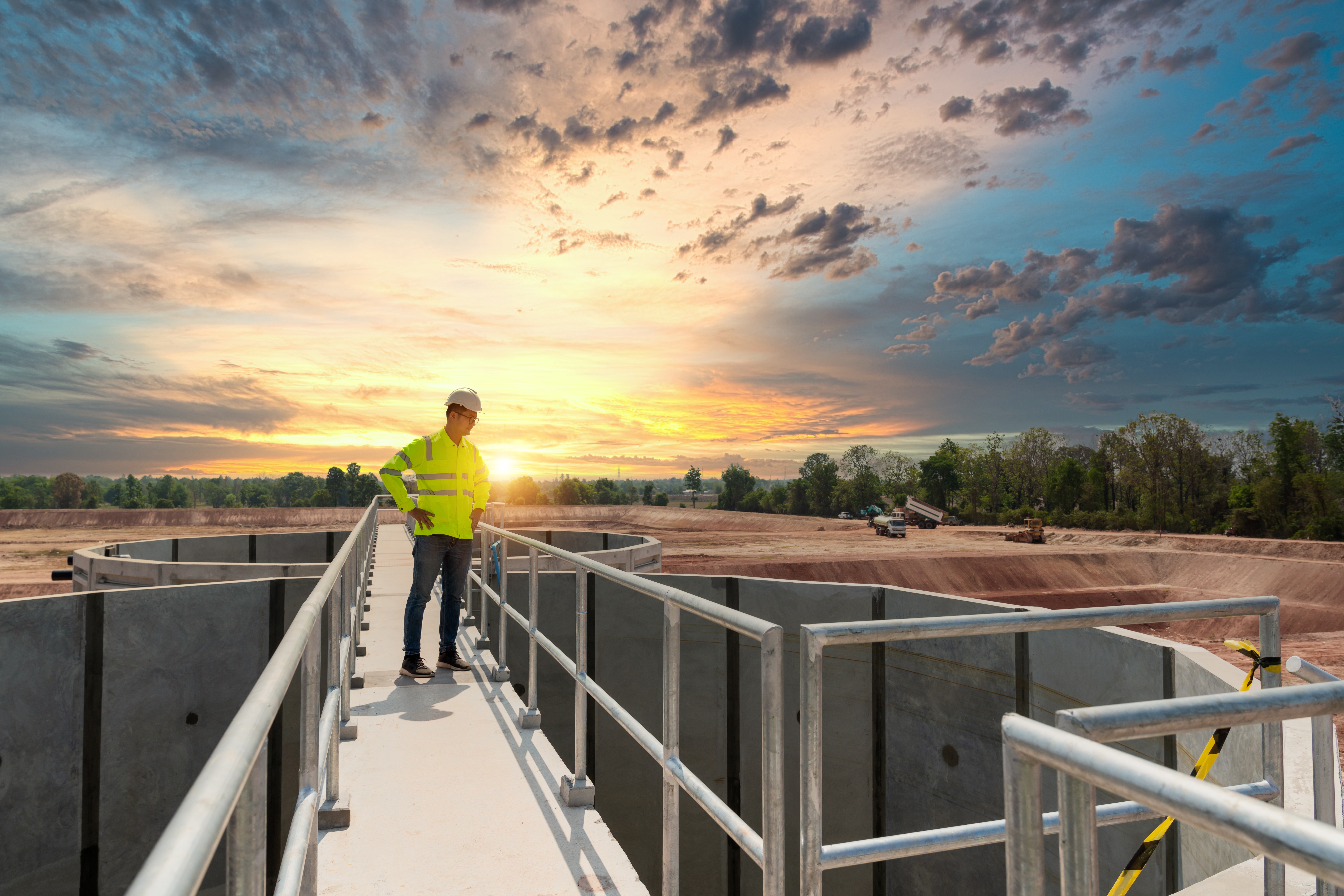 McFadden Engineering’s wastewater operators are a key part of that protection. Wastewater treatment operators manage plant equipment, test water samples to meet state environmental standards and ensure communities have clean, safe water.
With decades of experience in the wastewater sector, McFadden Engineering is the expert when it comes to industrial wastewater treatment. We specialize in analyzing existing treatment processes and then optimizing and/or expanding those processes for the benefit of the client.
We understand that each wastewater treatment scenario is unique in its goal including process requirements, permitting limits and other regulations. McFadden Engineering begins with a system evaluation and compliance review, then moves into planning for optimization of the wastewater treatment system and facilities. Additionally, our team works with clients to assess any opportunity to reuse water within their facility.
Protecting Groundwater Starts Early
This kind of consistency is also what keeps contaminants out of the ground in the first place. Poor everyday choices by both businesses and individuals lead to pollutants that can potentially permeate soil and reach groundwater or wash into storm drains that lead straight to lakes and rivers. Well-run treatment systems are the engineered backstop against that kind of contamination, filtering out pollutants before water re-enters the environment.
Wastewater treatment is easy to take for granted because it works quietly in the background. But every ounce of water that is properly treated is one less source of contamination for the groundwater beneath us and the rivers and creeks it ultimately feeds. This World Rivers Day, that is worth remembering: protecting what’s underground is one of the easiest ways to protect what flows above it.
Contact us today to learn more about our wastewater services.
McFadden Engineering Celebrates National Water Quality Month
August 10, 2026
In honor of National Water Quality Month, McFadden Engineering recognizes the importance of protecting one of our most valuable resources. We are proud to deliver environmentally sound solutions that help clients meet regulatory requirements while protecting water quality for future generations. This month, we are highlighting the services our team provides every day to protect water quality for the communities, businesses and ecosystems that depend on it.
The History of National Water Quality Month
The history of National Water Quality Month originally dates back to two U.S. congressional acts that were passed in the early 1970s to protect our water sources. Starting with the Clean Water Act that was passed in 1972, the federal government began taking steps to curb water pollution by making it illegal to dump high amounts of toxic materials into bodies of water. This set the standard for ensuring surface water was up to certain standards before being used for human consumption and recreation. In 1974, the Safe Drinking Water Act was passed to further protect the quality of groundwater and public water systems. National Water Quality Month is dedicated to making the most of the relatively small amount of fresh water we have, because having access to clean water is vital to human health, our collective agricultural needs and the needs of our environment.
Understanding Alabama’s Water Resources
Alabama’s greatest natural asset is its abundance of freshwater. Alabama has over 132,000 miles of rivers and streams and 10% of all continental U.S. freshwater flows through or starts in the state. Roughly 78% to 83% of all water withdrawn from Alabama streams is used to cool thermoelectric and nuclear power plants. Six of the 14 major rivers support commercial navigation via 16 locks and dams. Hydroelectric dams on state rivers provide about 10% of Alabama’s electricity needs.
This is where our work at McFadden Engineering comes in. Our services below reflect the day-to-day expertise our team brings to protecting Alabama’s rivers, lakes and coastal waters.
Water and Wastewater Treatment
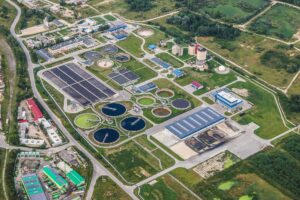
Our team is comprised of experts in water and wastewater solutions, with a mission of delivering innovative systems to solve the most challenging problems. Our engineers assist clients in developing treatment processes to reduce contaminants in wastewater. In addition, our team is experienced in helping clients navigate the environmental regulatory permitting process including direct discharge through the National Pollutant Discharge Elimination System (NPDES), reuse permits for sustainable projects as well as other permit alternatives. The primary goal for McFadden Engineering when working with our industrial wastewater treatment clients is to streamline treatment processes to achieve full compliance. With every treatment project we undertake, we strive to remove contaminants that would otherwise be released back into the water cycle from wastewater discharges.
Water Quality and Hydraulic Modeling
McFadden Engineering has been on the leading edge of water quality modeling for more than 30 years, helping to develop some of the first water quality models used by the Alabama Department of Environmental Management (ADEM). Water quality modeling can be used to estimate the environmental impact of factors such as wastewater treatment plant discharges, industrial activity and commercial site development. Our engineers specialize in developing innovative water quality models and analyzing modeling results for private clients, municipalities and regulatory agencies. Utilizing our Hach® in-house laboratory equipment, results are available in a matter of hours, minimizing the time and added cost of outsourcing lab results.
Protecting Water Quality, Today and for Generations to Come
From treatment and modeling to site assessments and floodplain analysis, McFadden Engineering brings a full range of expertise to every water quality challenge our clients face. As we celebrate National Water Quality Month, we remain committed to delivering environmentally sound solutions that protect the communities, businesses and ecosystems that depend on clean, safe water. If your organization is facing a water quality challenge, our team of experienced engineers is ready to help. Contact McFadden Engineering today to learn more about our services.
How Wastewater Treatment Operators Keep Processes Running Smoothly
July 10, 2026
 How Wastewater Treatment Operators Keep Processes Running Smoothly
Wastewater treatment operators manage plant equipment, test water samples to meet state environmental standards and ensure communities have clean, safe water. At McFadden Engineering, wastewater operators play a significant role in what we do, and they are much more than maintenance workers. Keep reading to learn more about the role wastewater treatment operators play in the environmental engineering landscape.
Wastewater Operators On the Job
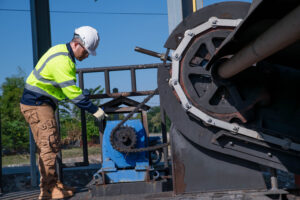
While the specifics of the sites where they work and the nature of the wastewater they manage may vary, the core responsibilities of a wastewater operator remain the same across the industry:
- Process control: Monitor control panels, meters and gauges to regulate the flow of wastewater through various treatment stages.
- Water testing: Collect and analyze samples (e.g., measuring pH, dissolved oxygen and solids) to ensure the effluent meets state and federal discharge regulations.
- Equipment maintenance: Perform routine maintenance and repairs on pumps, valves, blowers and generators using hand and power tools.
- Record keeping: Document gauge readings, test results and maintenance logs to then report data to regulatory authorities.
- Safety and compliance: Ensure facility operations meet OSHA safety standards and environmental laws.
McFadden Engineering Provides Operational Services Across the Southeast
McFadden Engineering’s wastewater operators provide operational services across a range of facilities throughout the Southeast.
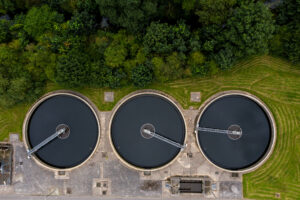
With clients in a variety of industries, our wastewater operators make regular site visits, review performance data, make process adjustments and ensure systems stay in compliance. The consistent, expert presence from our team is what keeps systems running. Learn more by viewing our related project work.
McFadden Engineering begins with a system evaluation and compliance review, then moves into planning for optimization of the wastewater treatment system and facilities. Additionally, our team works with clients to assess any opportunity to reuse water within the facility.
McFadden Engineering has a distinct advantage in its approach to wastewater management thanks to its professional relationship with Dr. A.J. Englande. Dr. Englande is Professor Emeritus for the Department of Global Environmental Health Sciences at Tulane University specializing in industrial wastewater applications, water quality issues and toxicity assessment and control. Dr. Englande helps McFadden Engineering provide its clients with world class expertise that cannot be supplied by the typical engineering firm.
Wastewater Treatment: The Bigger Picture
Wastewater operators play a significant role in the larger ecosystem of civil and environmental engineering services.
A treatment system is typically designed by engineers, permitted by regulators, built by contractors and then handed off to operators who then run the system for years or decades. If those stages are not integrated well, problems arise.
Because McFadden Engineering both designs and permits the system with input from the operators who eventually operate it, future issues can be avoided thanks to their baseline familiarity with and knowledge of the system. Engineers, geologists, biologists and operators both on our team and our trusted partners working together on a single system rather than separately provides team continuity, which matters deeply. An operator who understands the original design, permit history and the facility is in a much petter position than someone who steps into an existing system.
Wastewater treatment is infrastructure, which means it is usually only noticed by most people when problems arise. Operators who run these systems show up every day and work hard to maintain these systems to ensure water at their assigned sites is meeting standards that protect public health and the environment.
At McFadden Engineering, we have built a practice around the idea that doing this work well requires engineering and operational continuity. Our operators are a crucial part of our engineering process every step of the way.
Interested in learning more about our wastewater services? Contact us today.
McFadden Engineering Celebrates World Engineering Day and World Water Day
April 13, 2026

Earth Day 2026 carries a global theme of “Our Power, Our Planet,” which calls on people worldwide to come together in support of renewable energy and work toward tripling the global production of clean electricity by 2030. Earth Day 2026 affirms that environmental progress is real, resilient and ongoing despite policy uncertainty. Innovation, education and community problem-solving remain durable. Over one billion people across 193 countries will take action to protect our shared environment and participate in 2026 Earth Day events.
At McFadden Engineering, we create innovative environmental engineering solutions that make a positive impact in the communities we serve both close to home in the Southeast and across the country.
What is Earth Day?
Earth Day is an annual event held on April 22 that brings attention to environmental issues and encourages action to protect our planet. Since its inception in 1970, it has grown into the world’s largest environmental movement, engaging over one billion people across more than 190 countries. Before Earth Day, there were very few environmental regulations. Earth Day was established to raise awareness about protecting the environment through safeguards for handling toxic materials and protecting water resources to ensure safe drinking water.
Earth Day brings attention to pressing environmental challenges like climate change, pollution and biodiversity loss. It also provides a platform for individuals, communities and organizations to demonstrate their commitment to sustainability through events, campaigns and personal actions.
Engineering a Sustainable Future
Since the first Earth Day, numerous laws and regulations, including the Clean Air Act and the Clean Water Act, have been enacted to safeguard our environment and communities. At McFadden Engineering, we’ve always believed the goal isn’t just to help our clients meet permit requirements; it’s to provide long-lasting solutions that exceed them. Our work encompasses optimizing water systems, designing industrial wastewater treatment, water quality and hydraulic monitoring, as well as site assessment and remediation through low-impact designs and the advancement of energy-efficient practices.
Across all engineering disciplines, we are committed to finding innovative ways to preserve our environment. Our mission as engineers is to develop infrastructure that is both sustainable and environmentally conscious. We design systems that minimize ecological impacts, implement stormwater management solutions that enhance climate resilience and address public health challenges such as lead service line replacement. McFadden Engineering creates designs that improve the quality of life for today’s communities while considering the needs of future generations.
Our Commitment to the People and Planet
 The power referenced in this year’s Earth Day theme, “Our Power, Our Planet,” belongs to people like the utility managers, plant operators, municipal leaders and industrial clients we serve across Alabama, Florida, Georgia and Mississippi.
When they choose engineering partners who prioritize environmental outcomes, the impact is real and lasting: cleaner waterways, healthier communities and infrastructure built to serve future generations.
This Earth Day, McFadden Engineering is proud to be part of that work.
If you’re looking for an engineering partner who treats environmental responsibility as a design requirement, we’d love to connect. Contact our team to learn how McFadden Engineering can help with your next project.
McFadden Engineering Celebrates World Engineering Day and World Water Day
March 16, 2026
This March, two global observances that tie perfectly to our business fall close together. World Engineering Day lies on March 4 and World Water Day takes place on March 22. These two observances are a great opportunity to shine a light on the teams of engineers, including our own, who are working to make clean water possible.
Engineers Working in Water
Civil Engineers
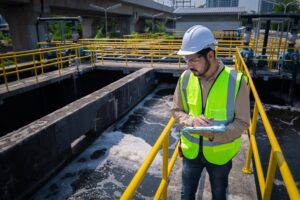
Civil engineers specializing in water plan, design and maintain infrastructure to manage water systems, including treatment plants, distribution systems, pipelines and storage tanks. Some key areas of focus for a civil engineer working in water include water supply and treatment, wastewater management, flood control and hydraulic structures and environmental and coastal management. Civil engineers complete a variety of tasks and no day is the same, but their work commonly involves modeling and design, field work and evaluation, ensuring projects adhere to environmental regulations and safety standards and project management.
Environmental Engineers
Environmental engineers specialize in water management by addressing stormwater, watershed and source water protection, water quality and pollution control. They use engineering, chemistry and biology to treat contaminants, rehabilitate polluted sites and ensure compliance within environmental regulations. Environmental engineers design or improve systems that minimize marine industry impacts on marine life, ecosystems, water quality, pollution and onshore communities.
Geotechnical/Structural Engineers
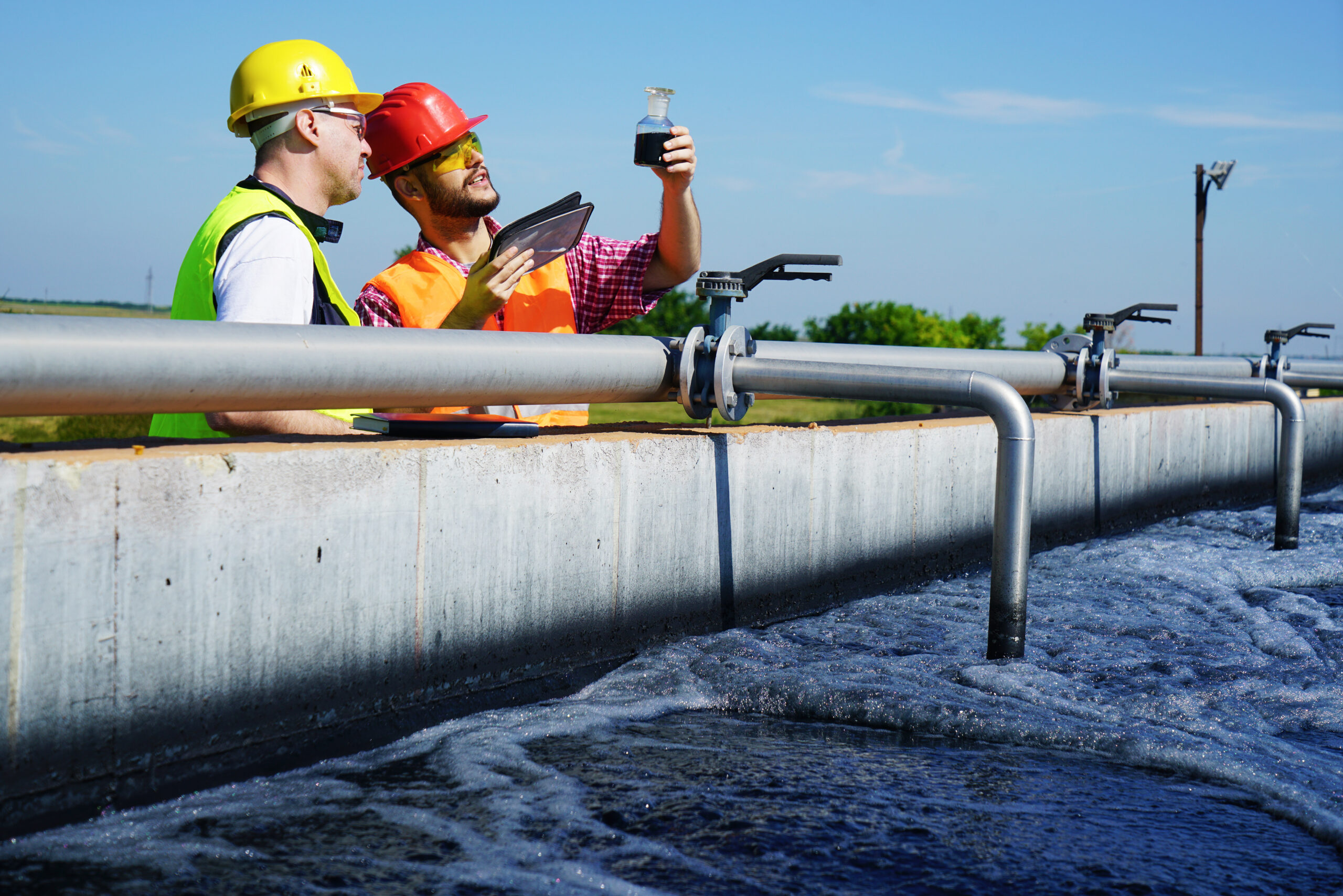
Geotechnical and structural engineers specializing in water projects design foundation, dams, levees and coastal structures (piers, seawalls) while managing complex hydraulic, seepage and soil stability issues. They crucially monitor and evaluate soil-water interaction to mitigate erosion, buoyancy and seismic risks. Field investigations, instrumentation and long-term monitoring are common parts of the job.
Mechanical and Electrical Engineers
Mechanical and electrical engineers in the water sector design, install and maintain critical infrastructure for water supply, treatment and distribution as well as hydropower systems. Mechanical engineers often design pumping systems, treatment plant equipment and hydraulic networks. Some mechanical engineers specialize in hydropower, focusing on turbine design, generators and converting kinetic energy to electricity. Mechanical engineers install and maintain pumps, mixers and filtration units in treatment plants. They also manage pipelines and flow in water/wastewater systems. Electrical engineers design electrical systems to drive pumps and treatment machinery. Electrical engineers also integrate SCADA (Supervisory Control and Data Acquisition) systems, sensors and controls for automatic water treatment. Electrical engineers also oversee the installation of electrical infrastructure and monitor it during operations.
Key Takeaway
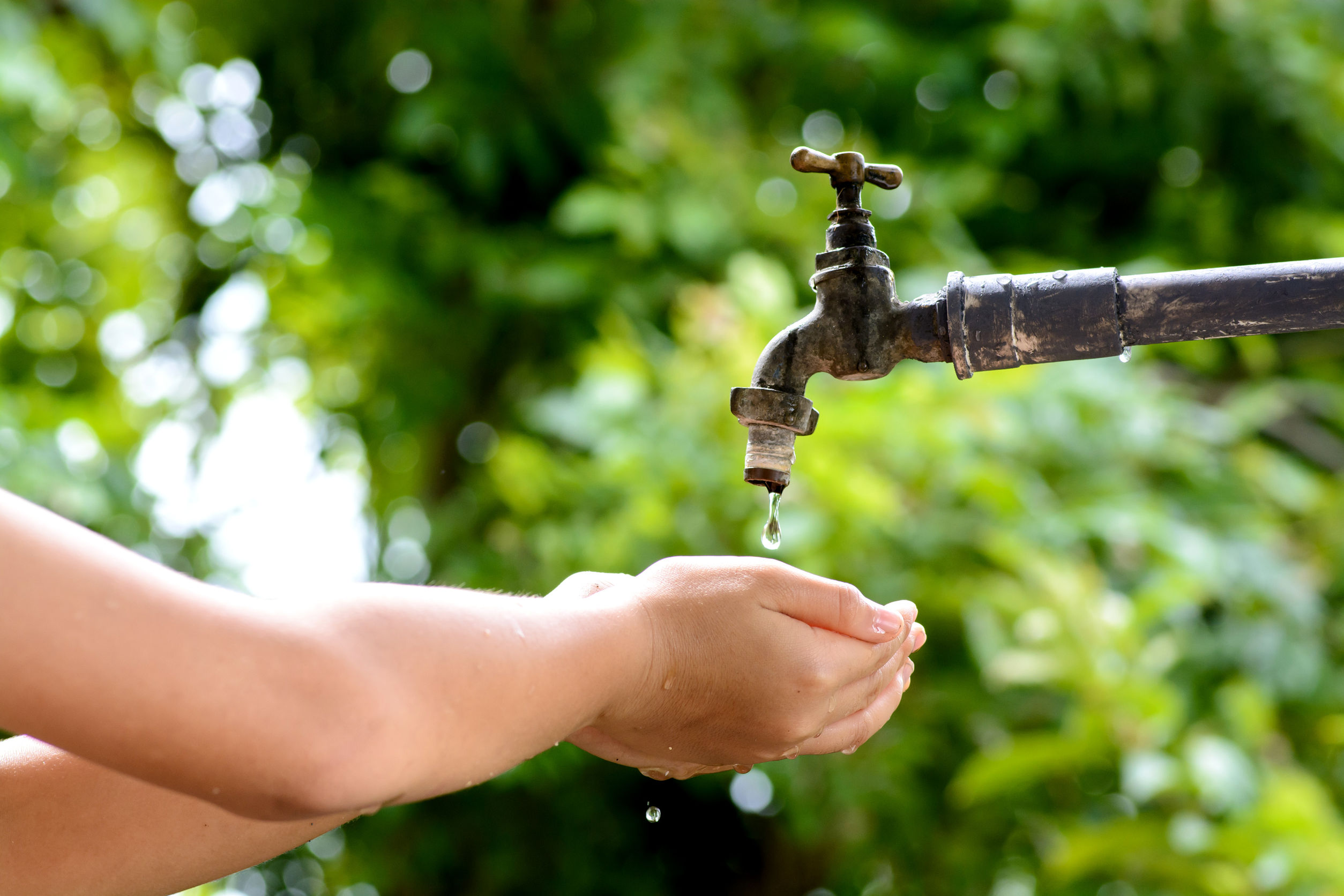
Water Engineering takes multiple engineers working together to ensure safe water makes its way from the source to the tap, then back again, through wastewater treatment.
The Full Water Cycle
Behind every glass of drinking water is a complex journey, one that engineers design, build and maintain at every single step.
Source Water and Intake
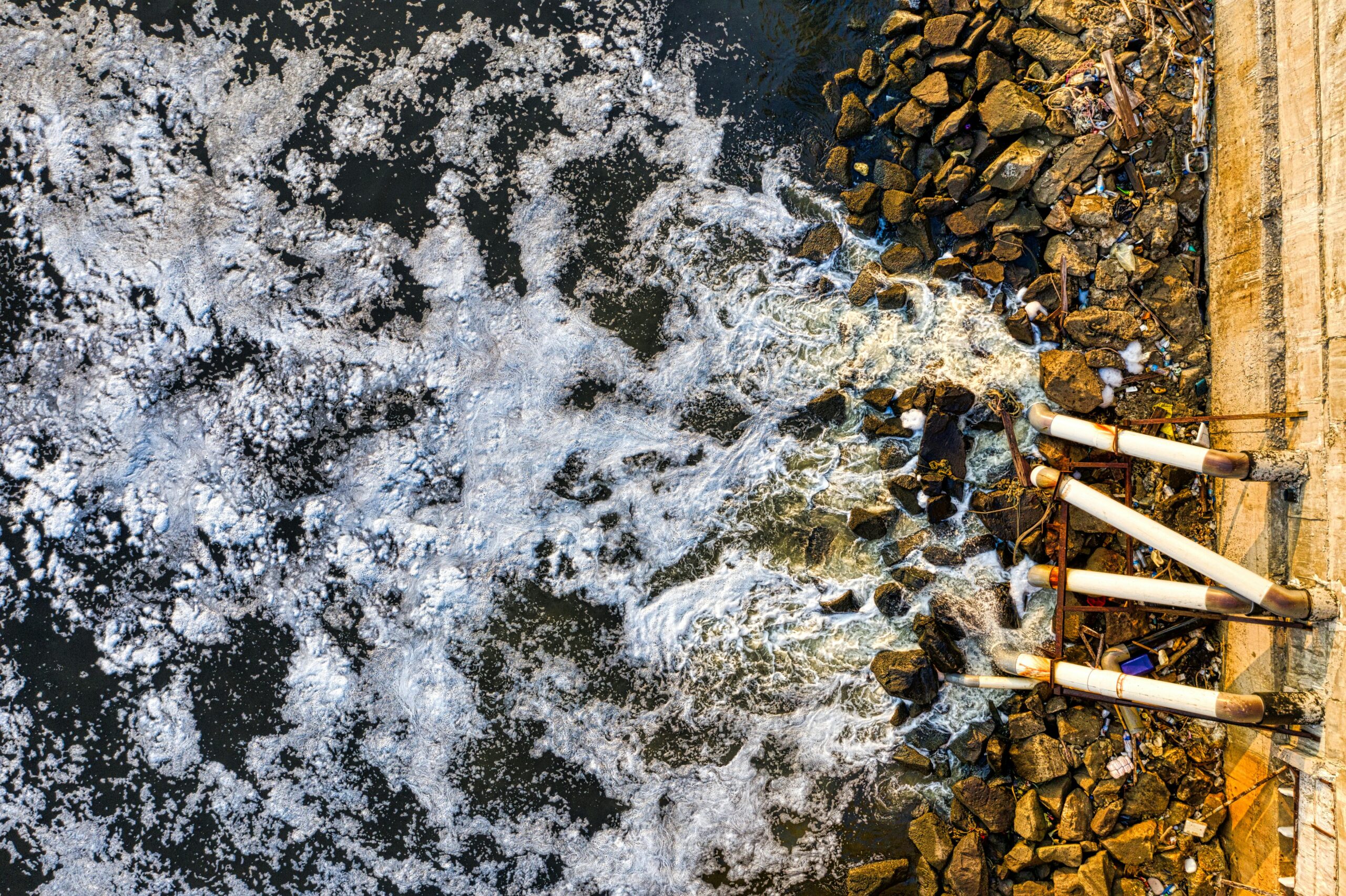
Engineers are already working to protect water before it even reaches the treatment plant. Reservoirs, rivers, lakes and other bodies of water all serve as sources of drinking water, and all sources require careful management. Civil and environmental engineers assess water quality at the source, design structures that minimize disruption to natural systems and develop protection plants that keep contamination from entering the water supply.
Treatment: Making Water Safe to Drink
Raw source water, no matter how clean it looks, is never safe to drink without treatment. Environmental and chemical engineers design water treatment systems that remove sediment, bacteria, viruses and other contaminants. These engineers work to meet both federal and state regulatory standards while balancing cost, energy efficiency and reliability. No matter the size of the community being served clean water, the goal is always the same: water that is safe, clean and consistently meets the standards people depend on.
Distribution: Getting Water Where It Needs to Go
Water treatment is only half of the process. Once the water is clean, it must travel through hundreds of miles of pipes, pumping stations and storage tanks to reach its destinations safely. Civil and mechanical engineers design these distribution systems to maintain pressure, prevent contamination after treatment and hold up under the demands of a growing population.
Wastewater Collection & Treatment
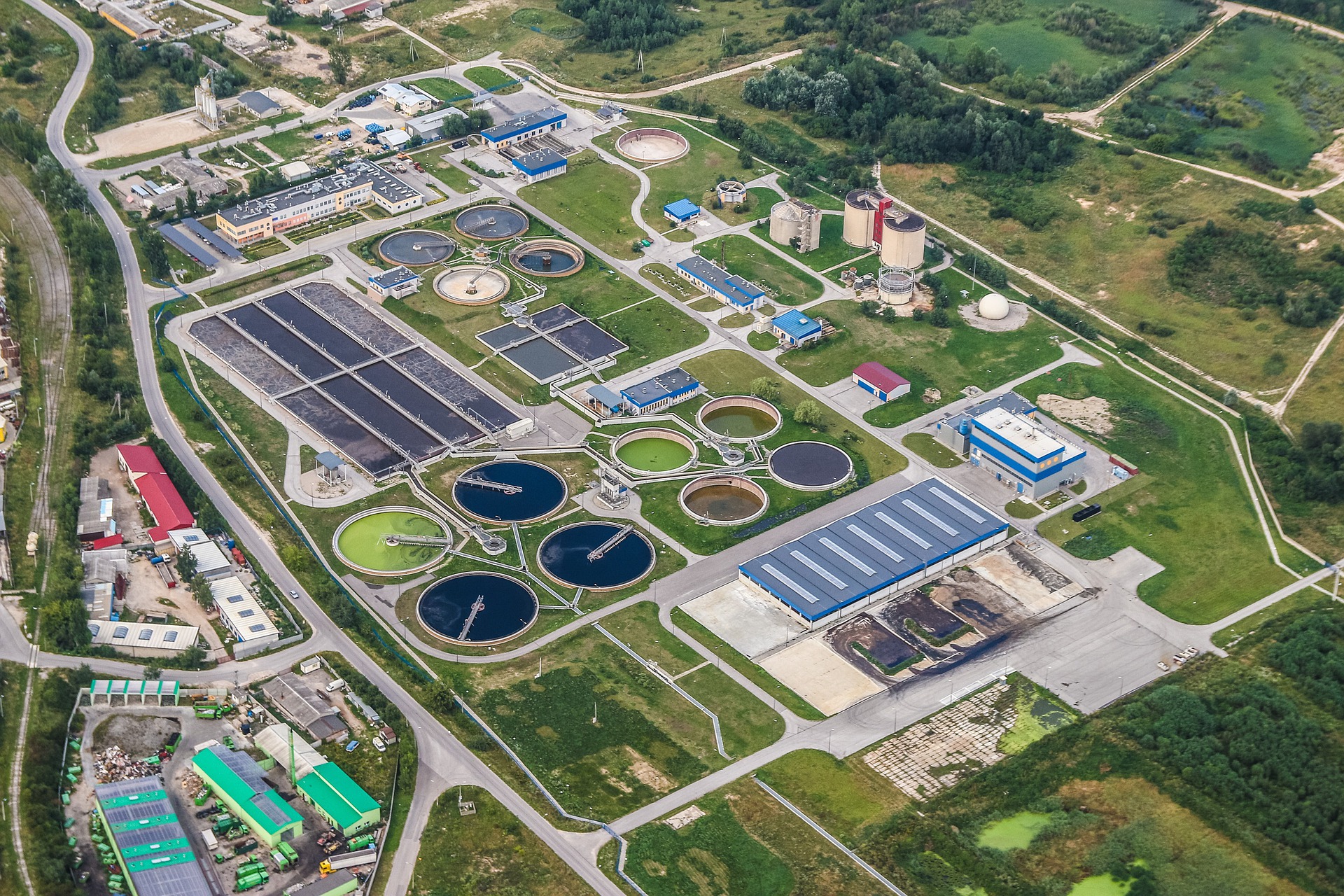
Water does not disappear after use. It flows down drains into a wastewater collection system, a network of sewer mains that environmental and civil engineers design for the water to then move safely to a treatment facility. At the wastewater treatment facility, the water then undergoes its own rigorous treatment process before being discharged and reused.
Stormwater Management
Rain and snowmelt add another layer of complexity to water/wastewater treatment. When water falls onto roads, pavement, parking lots and rooftops, it picks up pollutants (oil, bacteria, sediment, etc.) and carries those pollutants toward streams, rivers and groundwater supplies. Engineers design stormwater systems that slow this runoff, filter out contaminants and reduce flooding risks.
Why This Work is More Critical Than Ever
The engineering process behind clean water has always been essential. The pressure on water systems and the engineers who design and maintain them is greater than it has been in generations.
Aging Infrastructure
Much of the United States’ water infrastructure is very old. Water mains tend to have leaks and cracks. Treatment plants are often operating on outdated technology. Sewer systems that were designed for smaller populations now strain under the demands of growing populations.
A Changing Climate
Climate change is a threat for water systems. Droughts are reducing the availability and quality of water. Intense storms overwhelm aging stormwater systems. Flooding contaminates treatment facilities. Engineers are responding to climate change by designing more resilient infrastructure that is more adaptive and built to handle a wider range of conditions than ever before.
Growing Communities
Population growth and development put pressure on water systems that were not built to serve the demand of today’s population. New subdivisions, industrial facilities and expanding municipalities all need water and wastewater capacity that is yet to exist. Civil and environmental engineers are currently planning to design the expansions, upgrades and entirely new systems that make growth possible and sustainable.
Reaching Communities That Have Been Left Behind
Not every community has consistent access to clean water. Rural areas and small towns often operate inadequate systems. Engineers play a critical role in working with local governments to design practical, cost-effective solutions that bring safe water to everyone.
Engineering for A Smarter Future
This year, World Engineering Day has a theme of “Smart Engineering for Sustainable Future Through Innovation and Digitalization” which is very relevant within the water sector. Technology is transforming how engineers approach water challenges.
How McFadden Engineering Approaches Water and Wastewater
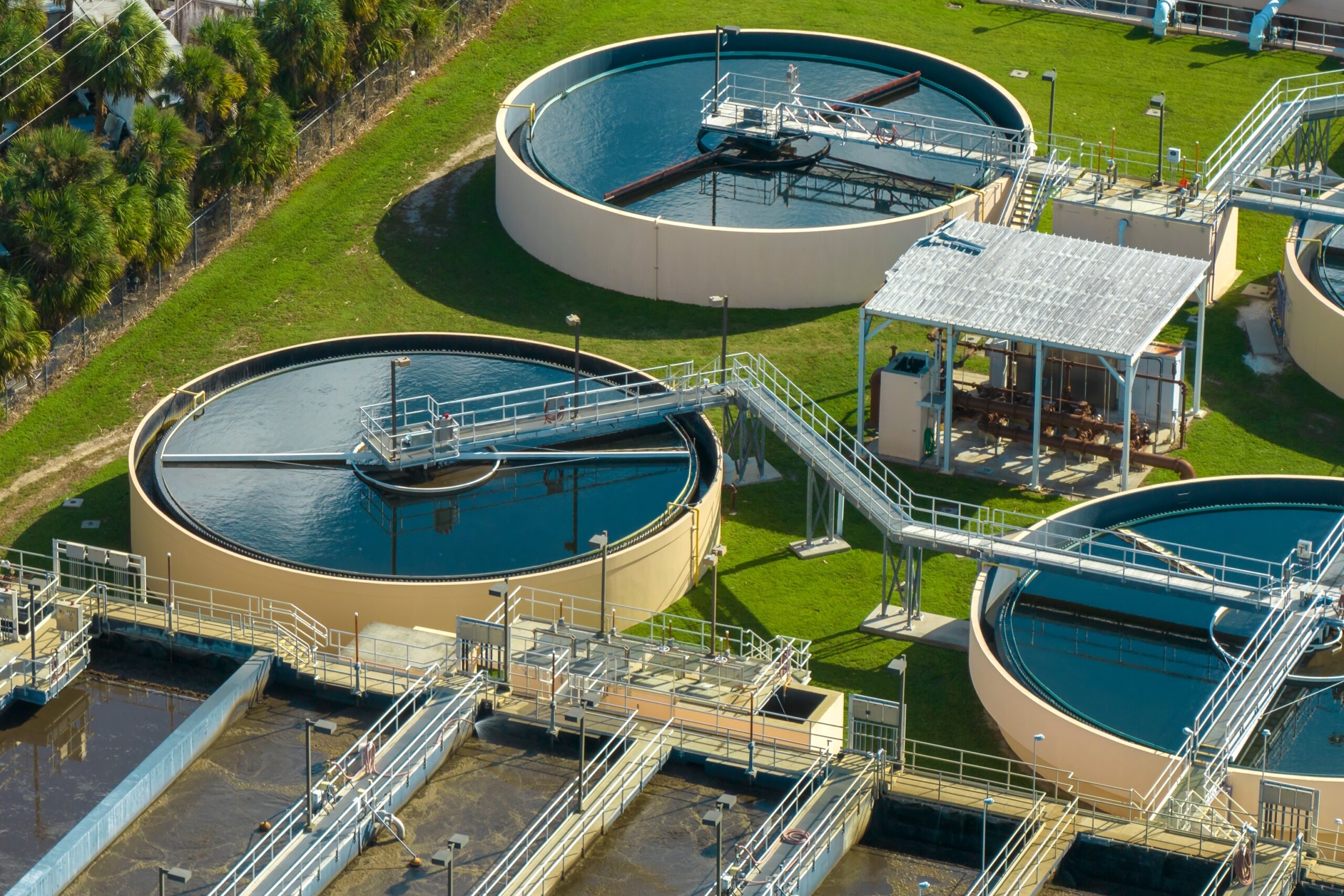
McFadden Engineering brings nearly a century of combined experience in civil and environmental engineering to the Southeastern United States. As active members of the Water Environment Federation, Partners for Environmental Progress and the Geological Society of America, we stay ahead of industry trends and are informed on research in our fields. With decades of experience in the water and wastewater sectors, McFadden Engineering is the expert when it comes to industrial wastewater treatment. We specialize in analyzing existing treatment processes and then optimizing and/or expanding those processes for the benefit of the client. Our goal for industrial wastewater treatment clients is to streamline treatment processes, achieve full compliance and ultimately reduce or eliminate surcharges and extra costs incurred from not meeting permit limits.
World Engineering Day and World Water Day fall just eighteen days apart. At McFadden Engineering, water and wastewater is a core part of who we are and what we do. We’re proud to be part of the engineering community working to solve one of the most fundamental challenges there is: making sure people have access to water that is clean, safe and reliable, today and for generations to come. This March, we’re celebrating both days with gratitude for the engineers who do this work, and with renewed commitment to doing it well.
Partner with McFadden Engineering to develop an industrial wastewater treatment solution that meets regulatory requirements, improves system performance and supports long-term operational goal.
How Industries Can Address Wastewater Treatment Challenges
February 19, 2026
Understanding Wastewater Sources
Wastewater is an unavoidable byproduct of both daily life and industrial operations.
Residential wastewater is generated from everyday household activities such as washing, cooking, laundry and sanitation. This type of wastewater typically contains soaps, microorganisms, waste and organic matter.
On the other hand, industrial wastewater is usually highly concentrated and complex in nature and can contain visible pollutants or dissolved chemicals. It is produced through manufacturing, processing, cleaning and other industrial operations. Depending on the industry, industrial wastewater can contain high levels of oils and grease, suspended solids, metals, chemicals and other materials. Because of its strength and variability, industrial wastewater frequently requires specialized treatment processes before it can be discharged or reused.
Industries that Produce Wastewater
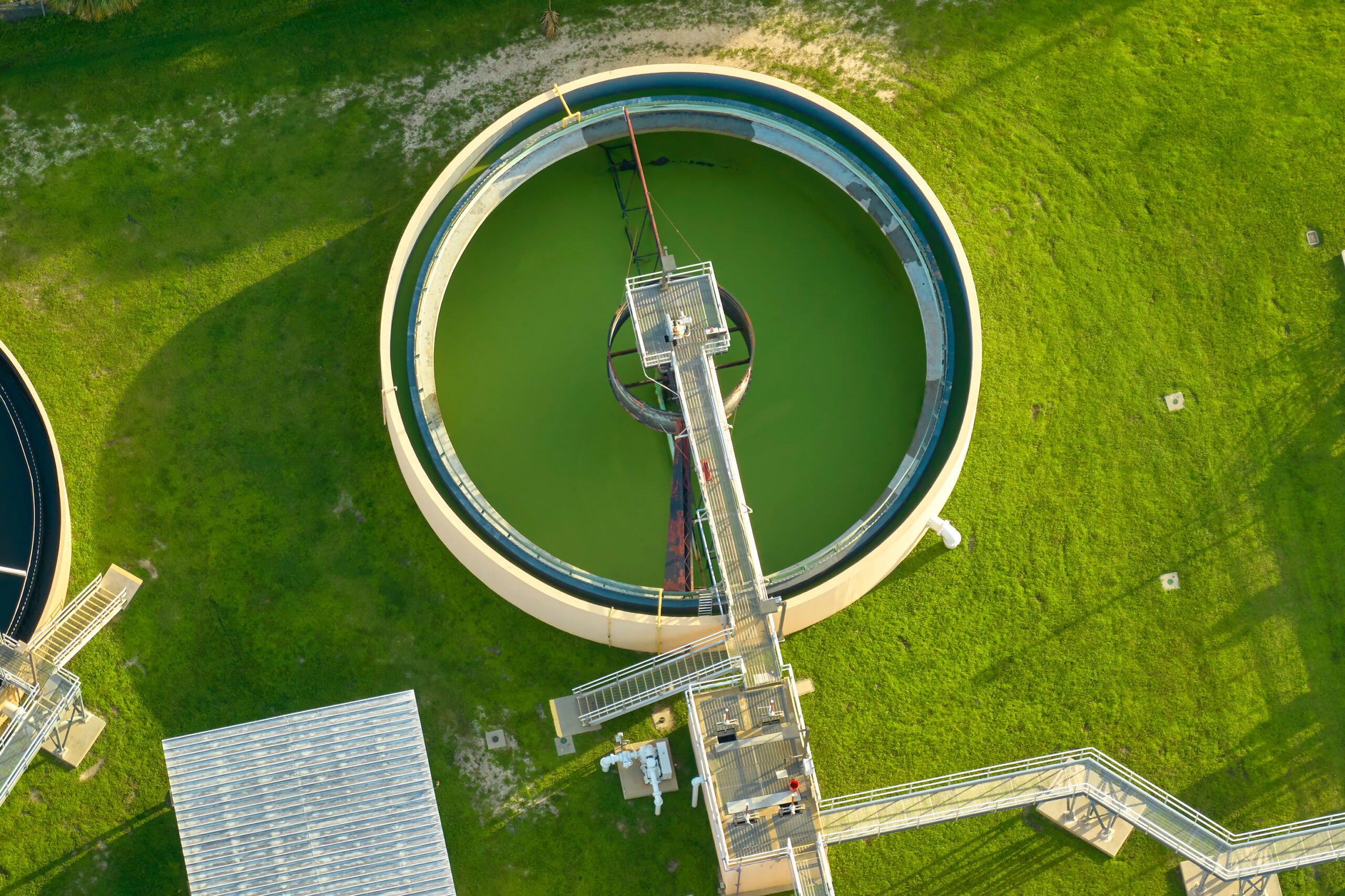
The Mobile area and the broader Southeast are home to a diverse range of thriving industries, from food and beverage manufacturing to oil and gas operations. Many of these facilities generate significant volumes of industrial wastewater, each with its own unique treatment challenges. McFadden Engineering works closely with customers in these industries to provide tailored wastewater treatment solutions that ensure compliance, efficiency and environmental responsibility.
Industries that have consulted our engineers include food and beverage, pulp and paper, wastewater acceptors, oil and gas drilling and more.
Food and Beverage
In the food and beverage industry, wastewater is typically generated during washing, processing and sanitation processes. This wastewater often contains sugars, fats, proteins and other materials that result in elevated Biochemical Oxygen Demand (BOD) levels. These can overwhelm municipal systems if not properly managed. Season production peaks and frequent sanitation cycles add further complexity, making consistent treatment performance a challenge.
Pulp and Paper
The pulp and paper industry produces wastewater from pulping, bleaching and other paper-forming processes. These wastewater streams include high levels of organic matter, harsh chemicals, metals and other contaminants which can be difficult to treat biologically and could require advanced chemical or physical processes to meet discharge limits. The volume of water used in the industry, combined with the complexity of contaminants, makes treatment design and optimization especially critical.
Oil and Gas Drilling
In oil and gas drilling operations, wastewater is generated from drilling fluids, equipment washdown and other operational processes. This wastewater may contain hydrocarbons, solids and chemical additives that require advanced treatment prior to discharge or reuse. Strict regulatory oversight and the risk of groundwater or surface water contamination demand robust treatment strategies that ensure safe discharge or reuse. Managing these waste streams is essential to protecting surrounding water resources and maintaining regulatory compliance.
Our Approach to Wastewater Treatment
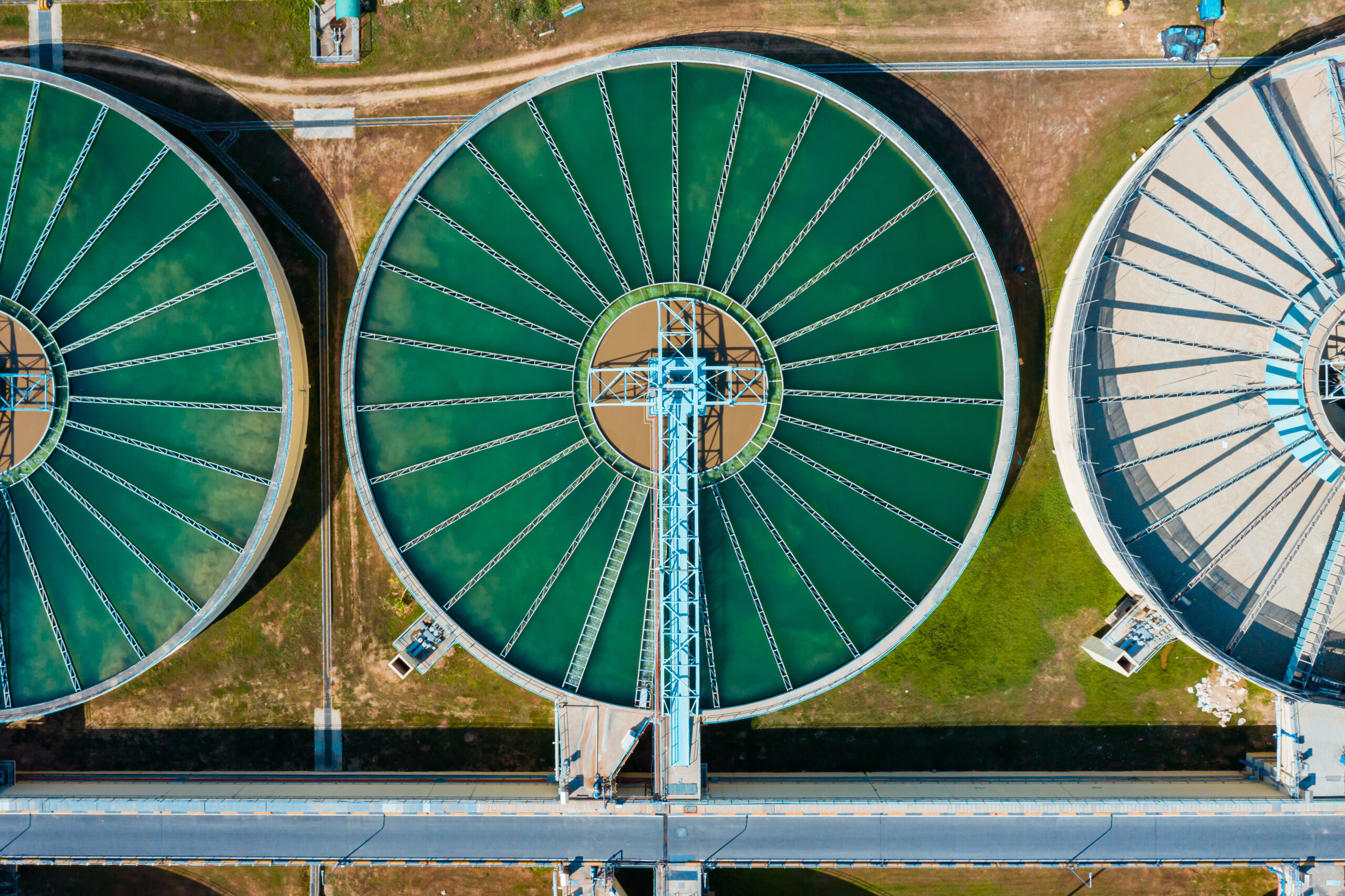
Each of these industries faces challenges related to wastewater variability, regulatory requirements and environmental responsibility. Variability in wastewater characteristics, evolving permit requirements, and aging infrastructure can make treatment systems difficult to manage. Proper evaluation and treatment are essential to ensuring that discharges meet applicable standards.
With decades of experience in the water and wastewater sectors, McFadden Engineering brings true expertise when it comes to industrial wastewater treatment. We understand that each wastewater treatment scenario is unique in its goals, including process requirements, permitting limits and other regulations. McFadden Engineering begins with a system evaluation and compliance review, then moves into planning for optimization of the wastewater treatment system and facilities.
Our services include:
- System evaluation and compliance review
- Planning for optimization of the wastewater treatment system and facilities.
- Assessing any opportunities to reuse water within the facility
- Streamlining treatment processes to achieve full compliance and ultimately reduce or eliminate surcharges and extra costs incurred from not meeting permit limits
Partner with McFadden Engineering to develop an industrial wastewater treatment solution that meets regulatory requirements, improves system performance and supports long-term operational goals.
Sustainable Infrastructure Keeps Communities Connected and Protected
January 16, 2026
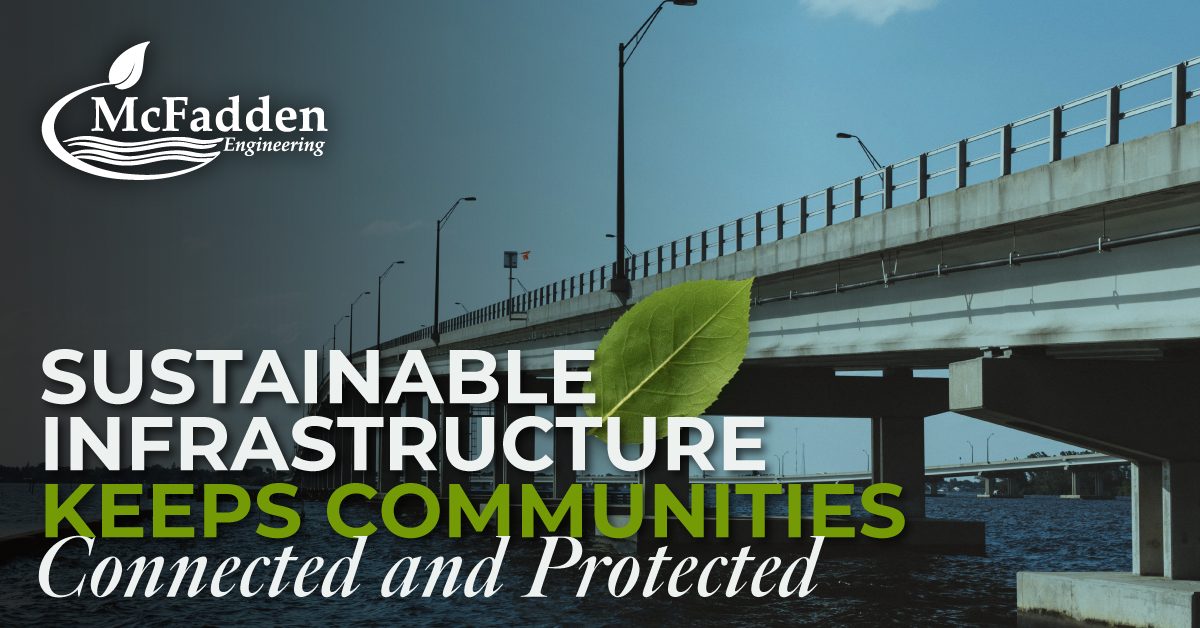
Public infrastructure makes up the backbone of how our country operates in its day-to-day. Cars, trucks, trains, boats and planes traverse land, air and water to move people and goods as quickly and efficiently as possible to keep up with our busy society.
Buildings are constructed to serve purposes from housing and office space to manufacturing and medical services. The infrastructure we can’t always see, like pipelines, sewage systems, digital networks and power lines, plays a huge role in providing daily necessities like electricity, natural gas and clean water.
Because infrastructure takes up so much space and touches many areas, even unknowingly, in our lives, it is critical for these systems to be sustainably designed, constructed and cared for to keep environmental and human health as a top priority.
What is Sustainable Infrastructure?
According to the International Institute for Sustainable Development, sustainable infrastructure involves the development of roads, buildings, energy and water infrastructure with consideration of economic, social and environmental implications. When infrastructure is carefully planned and consciously constructed, it can make a great impact on communities.
Sustainable Infrastructure in Alabama
Across the Southeast and here in our home state of Alabama, various sustainable infrastructure projects are both being developed and in the works. The Rebuild Alabama Act provides funding for road and bridge improvements across the state, with focus on generating economic growth and reinforcing safety on the state’s roadways. Additionally, the Bipartisan Infrastructure Law (BIL) offers funds for public transit, electric vehicle (EV) charging networks and rail improvements, which supports inclusive transportation options and aims to protect the environment. The BIL also provides grants for communities to improve drinking water, wastewater, and stormwater systems to protect environmental and human health by addressing dangerous contaminants.
In this part of the country, special consideration is made for potential regional hazards like hurricanes, floods, tornadoes, wildfires and other natural disasters when infrastructure projects are developed. One example is here in our own backyard, the I-10 Mobile River Bridge and Bayway, which is a large project to replace the low-lying Bayway with elevated bridges for storm resilience and better clearance for ships. New interchanges will also help motorists have an easier time navigating between Mobile and Baldwin Counties.
How McFadden Engineering Supports Sustainable Infrastructure
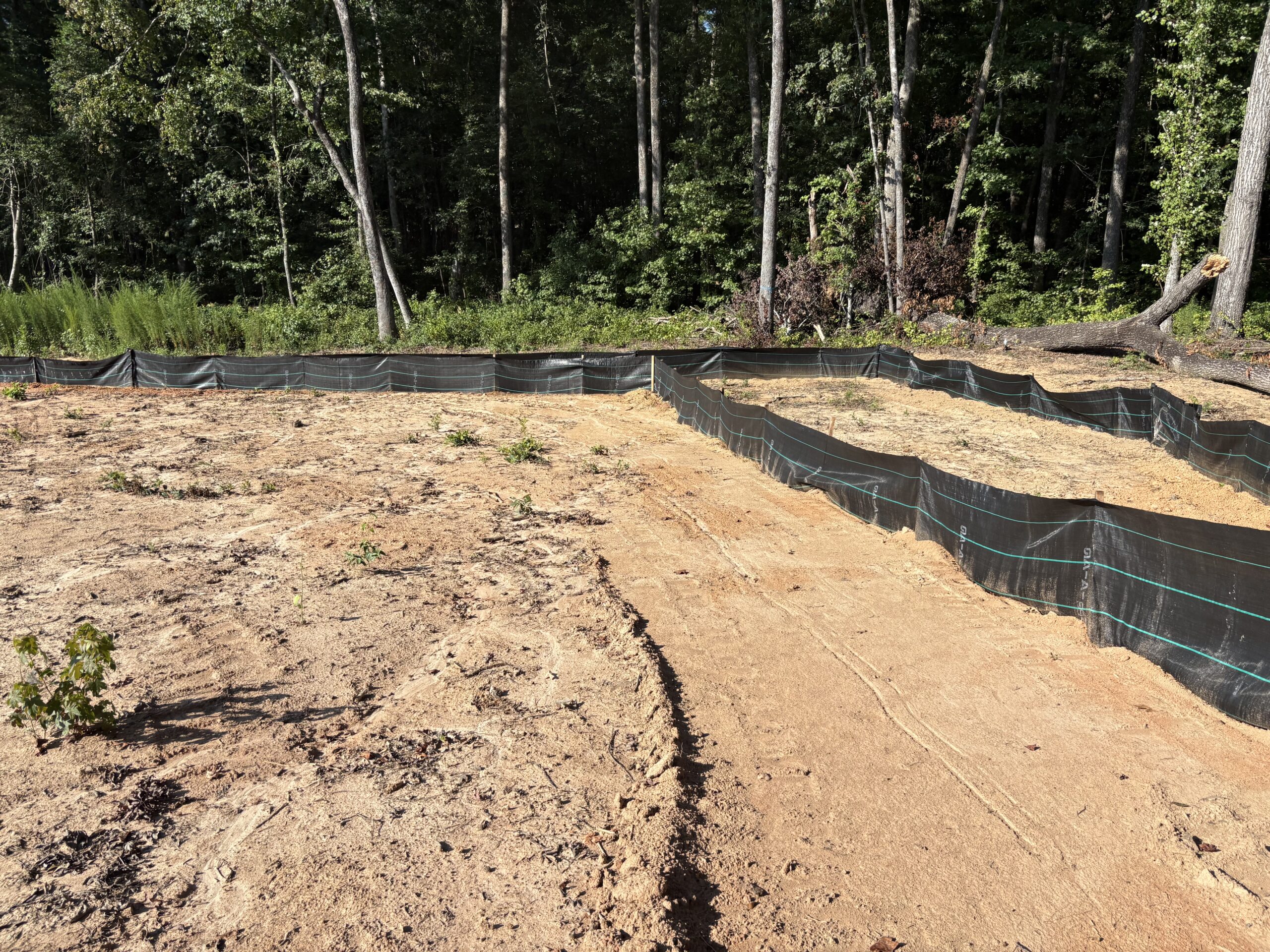
McFadden has played various supporting roles in sustainable infrastructure projects across the Southeast and the country, including a natural gas pipeline project in Georgia and various projects funded by Pipeline Hazardous Material (PHMSA) grants issued through the Department of Transportation (DOT). The work on these projects included environmental permitting, development of best management practices, evaluation of pipeline routes for environmental considerations such potential impacts on water bodies and wetlands, as well as the identification of environmentally sensitive areas within the project footprint.
The engineering team at McFadden can provide site assessment and remediation prior to project initiation and support environmental compliance efforts throughout projects, which are keys to developing sustainable infrastructure. Civil and environmental engineering services are critical for sustainable infrastructure projects to remain in compliance and be completed on time, and can include development master planning, grading and drainage plan development, detention/retention design and stormwater management.
McFadden also specializes in water and wastewater management, which is often a key component of infrastructure development and management. By evaluating the water and wastewater needs of the project, a solution can be developed that specifically addresses any problems.
No matter the type of sustainable infrastructure project or complexity of environmental implications surrounding it, McFadden is equipped to help. Browse our services and contact us today.
2025 Recap: Helping Clients Reach Environmental Compliance, Near and Far
December 15, 2025
As 2025 comes to a close, our team is proud to reflect on our various projects and accomplishments. McFadden Engineering experienced a year of growth, expansion and continued commitment to sustainable environmental engineering solutions to even the most challenging water and wastewater problems.
Compliance Work with ArcelorMittal Calvert
What began as a short-term compliance support project with AM Calvert, an industry-leading steel fabricator near Mobile, Ala., has evolved into ongoing work on a variety of engineering needs. McFadden supports AM Calvert through compliance monitoring, storm water monitoring, spill plan inspection services and implementation of best management practices (BMP).
In addition to compliance-related work, the McFadden team also upgraded AM Calvert’s sample collection systems by assisting the environmental team with designs to integrate auto-sampling equipment at numerous locations within the facility. McFadden has previously worked with AM Calvert on compliance for its steel mill, so the team welcomed the opportunity for an ongoing partnership.
Georgia Natural Gas Pipeline Project
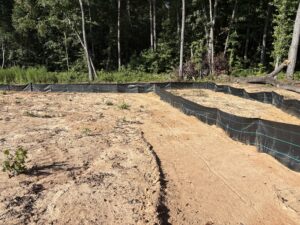 The installation and expansion of natural gas pipelines are a growing need across the country, including the Southeast. These projects are subject to strict environmental regulations, which made McFadden Engineering a perfect fit for ongoing environmental work for a large natural gas pipeline project in Northwest Georgia.
McFadden’s team of engineers worked on a 16-inch transmission pipeline construction project where they completed the environmental permitting and assisted with BMPs during Phase 1 of the construction. As Phases 2 and 3 prepare to begin, McFadden will continue its compliance work on the project.
Pipeline Hazardous Material (PHMSA) Department of Transportation Grants
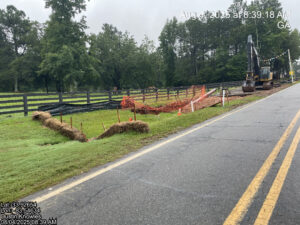
McFadden had additional opportunities to work in the natural gas sector this year thanks to Pipeline Hazardous Material (PHMSA) grants issued through the Department of Transportation (DOT). The grants support natural gas line upgrades for communities across the country, and the McFadden team spent time on the road to assist with the environmental work associated with the projects.
This year, the team has completed environmental work for associated projects in North Carolina, Ohio and Kansas. The work included evaluation of pipeline routes for environmental considerations such potential impacts on water bodies and wetlands, as well as the identification of environmentally sensitive areas within the project footprint.
Expanding Our Footprint
These projects and many others have culminated in a broader reach and an expanded footprint for McFadden Engineering during the past year. Our team continues to gain more work locally while also supporting projects across the country, from the Midwest to the East Coast and back down South.
We appreciate our clients near and far and look forward to continued growth in the coming year. If you need environmental compliance support in the new year, our team is here to help—browse our services and contact us today.
Mobile Chamber of Commerce- Small Business of the Month
August 31, 2018
McFadden Engineering SPOTLIGHT
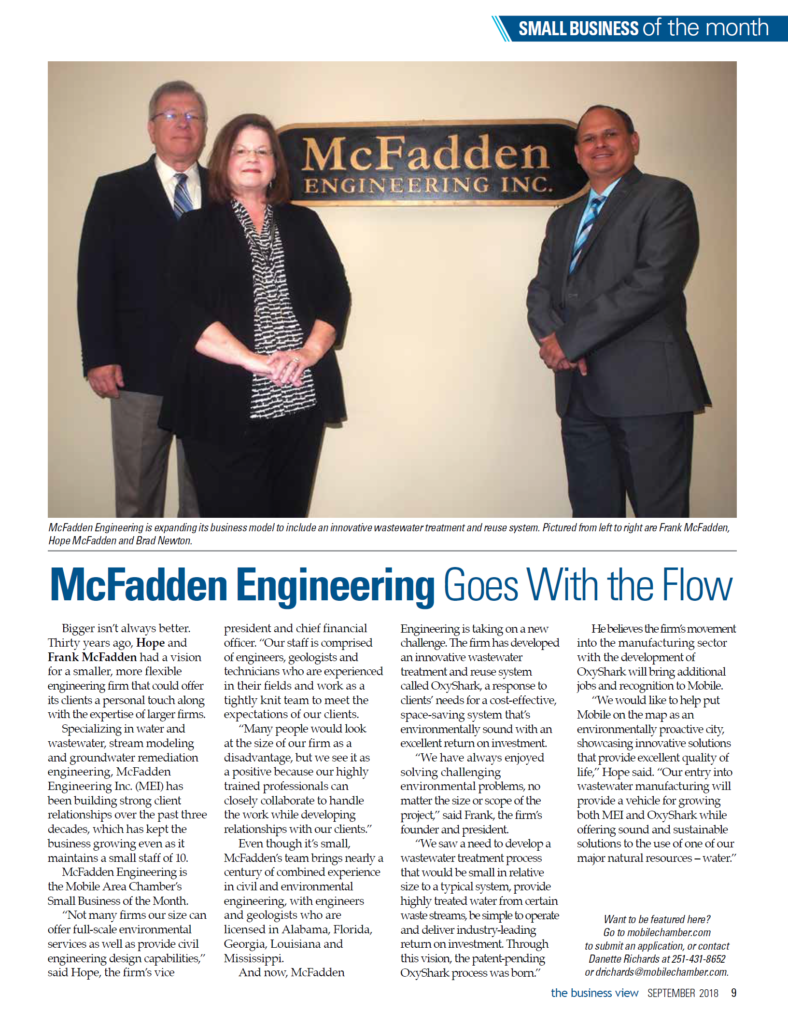
Thank you to the Mobile Chamber for featuring McFadden Engineering as the Small Business of the Month for September.
Meet Our Geologists, Part 2: Matt Pastorcich
September 26, 2017
McFadden Engineering’s team of experienced engineers and geologists complement one another’s work to offer a holistic solution to solve even the most complex client project.
Get to know more about McFadden Engineering’s geologists in part two of this two-part blog series.
Matt Pastorcich – Staff Geologist:

McFadden Engineering’s staff geologist, Matt Pastorcich.
Matt Pastorcich joined McFadden Engineering in 2007 and will celebrate his 10th anniversary with the firm in October. He holds two bachelor degrees, one in geology and one in biology, from the University of South Alabama.
What led you to study and pursue geology?
My experience working in environmental testing got me interested in both hydrology and civil engineering. After working in the field for a major environmental laboratory, I decided to go back to college to pursue a degree that would lead to a professional certification. After studying engineering for a while, I became interested in the study of hydrogeology and contaminant hydrology. I switched my studies to geology with the goal of becoming a licensed geologist in the environmental consulting field.
What does a hydrogeologist do?
Geology is a diverse field of study. As a hydrogeologist, I interpret data from investigations of impacted groundwater sites to form an overall picture of what is going on below ground. In drawing meaningful conclusions based on the hydrogeology at a project site, we can make recommendations on the design of remediation efforts put into place at a site.
In my job, I write reports for clients that will be submitted to state regulators and make recommendations related to future actions at a project site. I also work in the field assisting with drilling, subsurface investigation, groundwater and surface water collection. Another task I am frequently engaged in is water quality investigation for wastewater treatment studies, in which I work closely with our engineers.
What is your favorite project or proudest moment that you have experienced in your role at McFadden Engineering?
My favorite project and my proudest moment took place as part of the same particular project site. The project was very challenging, involving hydrogeology, contaminant hydrology and innovative environmental engineering solutions. My proudest moment came when we completed the construction of our groundwater treatment systems at this particular site. It was the culmination of intensive investigation at the site.
What’s a common misconception about being geologist?
That you are a guy who looks like Indiana Jones who goes around the world with a pick axe cracking open rocks and studying them. That would be fun, though!